
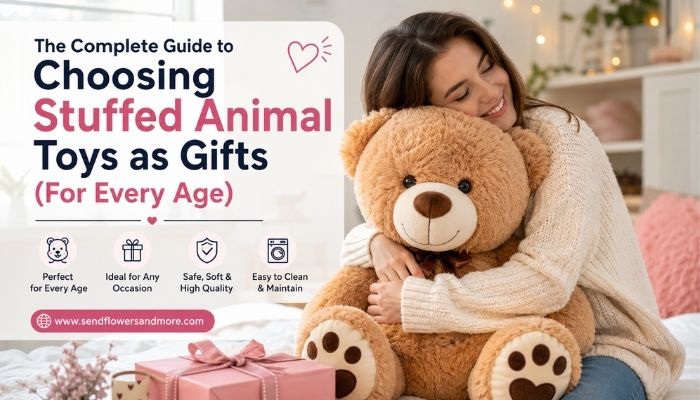
If you're staring at a wall of plush toys wondering which one is actually a good gift and which one will end up in a donation bin by next spring, you're not alone. The right stuffed animal toys can become a lifelong keepsake — the wrong one is forgotten in a week. The difference usually comes down to three things: who you're buying for, what the toy is made of, and how easy it is to keep clean. This guide walks through all three, plus real occasions where a plush gift outperforms flowers, candy, or a gift card.
Why Stuffed Animals Still Make Great Gifts
Plush toys are one of the few gifts that work across the entire age range — from a newborn's first crib companion to a "get well soon" gift for a grandparent recovering from surgery. Unlike flowers, they don't wilt. Unlike gift cards, they carry sentiment. A well-chosen plush gift for kids or an adult is remembered because it sits on a shelf, a bed, or a desk for years, not because it was expensive.
The trick is matching the toy to the person, not just grabbing whatever's cutest on the shelf. That's where most gift-buyers go wrong — and it's the whole focus of the next section.
Choosing by Recipient: Baby, Toddler, Kid, Teen, or Adult
For Babies (0–12 months)
Baby plush toys need to prioritize safety over size or detail. Look for:
- Machine-washable fabric (babies drop everything, repeatedly)
- No small attached parts — buttons, plastic eyes, or bows that could detach
- Soft, low-pile fur that won't irritate sensitive skin
- A manageable size, roughly 8–12 inches, that a baby can actually hold
Avoid anything with battery compartments or loose stuffing seams for this age group. A simple, huggable animal in a neutral or gender-independent color works well for baby showers, births, or "welcome home" gifts.
For Toddlers (1–3 years)
Stuffed animals for toddlers should be built for rough handling — dragging across floors, being used as a pillow, occasionally landing in a bathtub. Reinforced seams matter more here than fancy detailing. Toddlers also respond well to plush toys that mirror a favorite show, animal, or bedtime story character, since recognition builds attachment faster than novelty does.
For Kids (4–10 years)
This age group is where personality starts to matter. A shy child might gravitate toward a smaller, softer companion; an outgoing kid might want something oversized and dramatic. Interactive or textured plush (crinkly ears, different fabric patches) tends to hold interest longer than a purely decorative one.
If you're shopping specifically for this age range, our send stuffed animals collection is organized to make it easy to filter by size and style rather than scrolling through everything at once.
For Teens and Adults
This is the most overlooked category, and often the most appreciated. A well-made, oversized, or novelty stuffed animal reads as a genuine gesture, not a childish one — think "get well soon," "thinking of you," graduation, or a long-distance relationship gift. The key is choosing something that looks intentional rather than leftover from the kids' aisle: a neutral color palette, higher-quality fabric, or a design tied to an inside joke or shared memory.
Best Occasions for a Plush Gift
Stuffed animals aren't just for children's birthdays. Some of the strongest use cases are:
- Birthdays (any age) — pairing a plush with a card or small treat is a classic combination that never feels dated
- New baby / baby shower — often paired with a blanket or onesie
- Get well soon — a comforting, low-effort-to-receive gift for someone who's not up for much else
- Sympathy — a soft gift is sometimes gentler than flowers for a grieving child
- Long-distance relationships — a "hug in a box" that stands in for physical presence
- Graduation or milestone moments — especially a design tied to a school mascot or personal interest
If a birthday is the occasion you're shopping for, our birthday stuffed animals collection is built specifically around that moment — sized and styled for gifting rather than everyday shelf decoration.
Safety and Material Basics You Shouldn't Skip
Before checkout, a quick mental checklist saves headaches later:
- Age labeling — toys made for children under 3 must meet stricter small-parts standards; check the label, not just the toy's appearance.
- Washable construction — a tag that says "surface wash only" is a red flag for anything going to a baby or toddler.
- Seam quality — gently tug at seams in-store or check reviews online; loose stitching is the #1 cause of stuffed animals falling apart.
- Fabric type — synthetic plush (polyester) is generally more durable and washes better than natural fiber blends, which can mat or shrink.
- Fire-retardant and non-toxic dye certification — especially relevant for gifts going to infants who mouth everything.
None of this needs to slow down the gift-buying process — it just means glancing at the tag before you commit.
How to Keep a Stuffed Animal Looking New
A gift is only memorable if it survives being loved. A few basics extend a plush toy's life significantly:
- Check the care label first. Some plush toys are machine-washable on a gentle cycle; others should only be spot-cleaned or hand-washed.
- Use a mesh laundry bag if machine washing, to protect seams, fur texture, and any decorative stitching.
- Air-dry when possible. High heat from a dryer can flatten fur, warp plastic eyes, or shrink certain fabrics. A low, no-heat or air-fluff setting is safer if a dryer is necessary.
- Spot-clean for older or delicate toys. A damp cloth with a small amount of mild soap handles most everyday grime without a full wash cycle.
- Brush the fur once dry to restore texture, especially on toys with longer or denser plush.
Building a five-minute care routine into gift-giving — a quick note like "here's how to wash it" — is a small touch that makes the gift feel more thoughtful, not less.
FAQs:
1. Is a stuffed animal an appropriate gift for an adult?
Yes — as long as the style matches the moment. Oversized, high-quality, or sentimentally themed plush toys are common for graduations, sympathy, get-well, and relationship milestones, not just children's occasions.
2. What size stuffed animal is best for a baby?
Something in the 8–12 inch range is generally easiest for a newborn or infant to interact with safely, without the toy overwhelming the crib or car seat.
3. How often should a stuffed animal be washed?
For toys in regular use — especially with young children — a wash every few weeks is reasonable. Decorative or shelf-kept plush toys need cleaning far less often, typically just spot-cleaning as needed.
4. Can all stuffed animals go in the washing machine?
No. Always check the care tag first. Toys with battery packs, glued-on parts, or delicate embellishments usually require hand-washing or spot-cleaning instead.